Why Is My Child Squinting at the Board? Recognizing Early Signs of Myopia in Seattle Schools

Why Is My Child Squinting at the Board? Recognizing Early Signs of Myopia in Seattle Schools

Why Is My Child Squinting at the Board? Recognizing Early Signs of Myopia in Seattle Schools

Why Is My Child Squinting at the Board? Recognizing Early Signs of Myopia in Seattle Schools

Why Is My Child Squinting at the Board? Recognizing Early Signs of Myopia in Seattle Schools

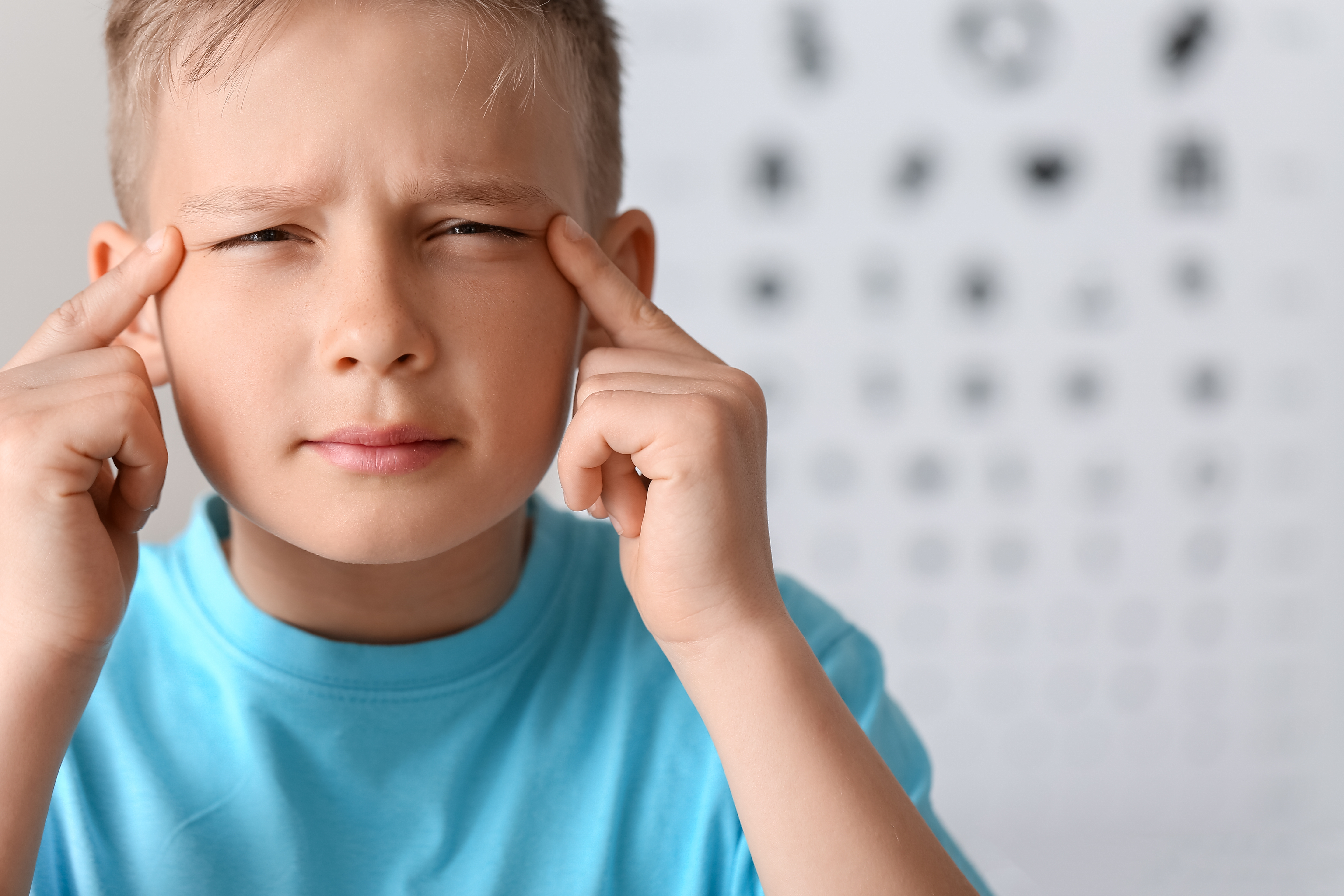
If your child regularly squints to see the classroom board, sits closer to the television, or complains that distant objects look blurry, myopia may be developing. Myopia, also called nearsightedness, makes far-away objects difficult to see clearly while near vision often remains sharp. At Optometry Medical Group in Seattle, we provide pediatric eye exams and personalized myopia management to identify these changes early and help protect your child’s developing vision.
Why Squinting Can Be an Early Sign of Myopia
Squinting temporarily changes how light enters the eye and may make blurry objects appear slightly clearer. That is why a child with undiagnosed myopia may squint when trying to read the board, watch a presentation, or recognize something across the classroom.
The National Eye Institute identifies difficulty seeing distant objects, squinting, and eye strain as common symptoms of myopia. Mild nearsightedness may not always cause obvious complaints, which makes regular eye exams especially important during the school years.
For Seattle parents, watching how your child behaves during homework, sports, and other visual activities can provide valuable clues between eye exams.
Signs Your Child May Be Becoming Nearsighted
Children do not always know their vision is blurry because they may assume everyone sees the same way. Signs worth paying attention to include:
- Squinting to see classroom boards or distant signs
- Sitting closer to the television or classroom displays
- Complaining that far-away objects look blurry
- Moving closer to see details
- Experiencing tired or strained eyes
- Needing stronger glasses at repeated eye exams
- Struggling with activities that depend on clear distance vision
If these habits become frequent, a pediatric eye exam can determine whether myopia or another vision concern is responsible.
Why Myopia Can Progress During Childhood
Myopia commonly occurs when a developing eye grows too long from front to back. This causes images from distant objects to focus in front of the retina instead of directly on it, resulting in blurry distance vision.
As children grow, myopia can continue progressing. This is why a student who received their first pair of glasses a few years ago may need a noticeably stronger prescription today.
Regular eye exams at our Seattle practice allow us to monitor prescription changes and evaluate eye growth. Optometry Medical Group notes that myopia evaluations may include measurements of the cornea, eye length, and focusing power to better understand the degree of nearsightedness.
Glasses Correct Myopia, but Management Goes Further
Standard prescription glasses can make the classroom board clear again, but traditional single-vision correction does not address the underlying eye growth responsible for progressive myopia. Certain myopia management treatments are specifically designed to slow progression.
Optometry Medical Group offers several myopia management options in Seattle, including Ortho-K, low-dose atropine eye drops, and dual-focus soft contact lenses. Ortho-K uses specialized gas-permeable lenses worn overnight to temporarily reshape the cornea. Dual-focus contact lenses provide clear distance vision while using specialized optics designed to slow myopia progression.
The appropriate approach depends on your child’s age, prescription, eye health, rate of progression, lifestyle, and comfort with contact lenses.
Make Eye Exams Part of the School-Year Routine
Children rely on their vision throughout the school day for reading, writing, computer work, sports, and seeing information from across the classroom. Optometry Medical Group emphasizes that identifying and addressing vision problems can support reading, classroom focus, and other visually demanding activities.
If your Seattle student is squinting at the board, complaining about blurry distance vision, or needing stronger prescriptions, schedule a pediatric eye exam and myopia management evaluation with Optometry Medical Group. Visit our Rainier office at 3324 Rainier Ave S., Seattle, WA 98144 and call (206) 322-6915, or our Madison office at 1721 22nd Ave, Seattle, WA 98122 and call (206) 395-2285 to help your child start the school year with clearer vision and proactive myopia care.


Our Services
Rainier
Phone: (206) 322-6915
Fax: (206) 395-2315
- Monday Closed
- Tuesday 9:00 AM - 5:00 PM
- Wednesday 9:00 AM - 5:00 PM
- Thursday 9:00 AM - 5:00 PM
- Friday 9:00 AM - 5:00 PM
- Saturday 9:00 AM - 5:00 PM
- Sunday Closed
Madison
Phone: (206) 395-2285
Fax: (206) 395-2329
- Monday Closed
- Tuesday 9:00 AM - 5:00 PM
- Wednesday 9:00 AM - 5:00 PM
- Thursday 9:00 AM - 5:00 PM
- Friday 9:00 AM - 5:00 PM
- Saturday 9:00 AM - 5:00 PM
- Sunday Closed
© 2026 Optometry Medical Group. All rights Reserved. Accessibility Statement - Privacy Policy - Sitemap
Powered by:
